Problems Caused by Excessive Reverberation
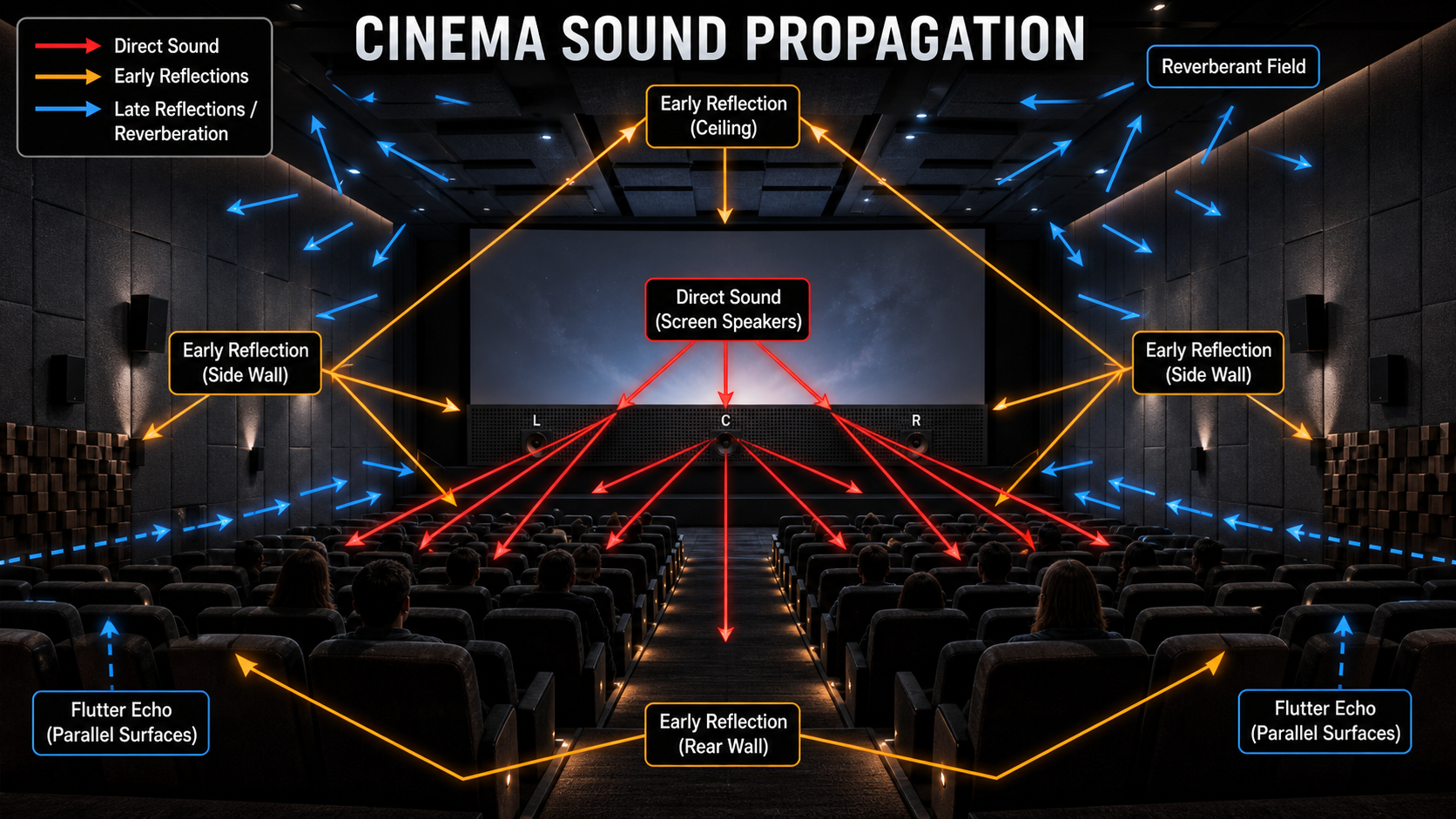
Excessive reverberation can blur surround sound, reduce dialogue definition and create uneven sound distribution across audience seating areas.
Cinema acoustic design
Professional cinema acoustic design is critical to deliver immersive surround sound experience for audiences. Improper reverberation, internal echo and sound leakage will greatly ruin movie viewing effects. Our tailored acoustic panel systems help balance sound reflection and absorption to meet standard requirements for commercial auditoriums.
Concept cinema interior with acoustic wall and ceiling surfacesKey Acoustic Challenges
Excessive reverberation can blur surround sound, reduce dialogue definition and create uneven sound distribution across audience seating areas.
Sound transmission leakage, ventilation resonance and structural paths can affect neighbouring screening halls and disrupt the intended experience.
Our Acoustic Solutions
We provide integrated acoustic design solutions for commercial cinemas.
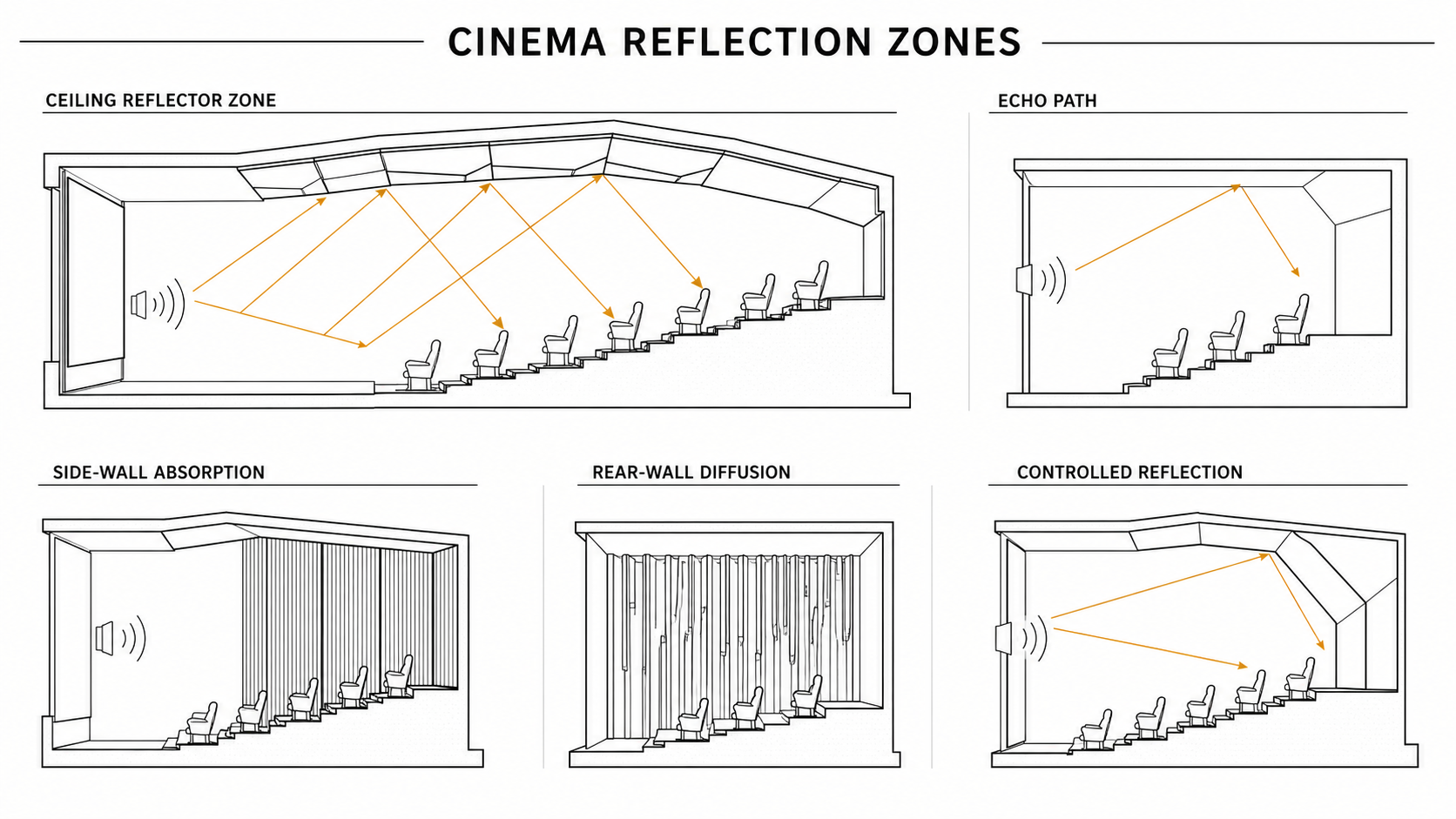
Grooved wooden acoustic panels, fabric wrapped absorbers and acoustic diffusers can be reasonably arranged on walls and ceilings to control reverberation time within the ideal range.
The system combines controlled reflection with low-frequency absorption to support clear dialogue and rich low-frequency performance.
Core Design Recommendations
Set the reverberation target against hall scale, seating capacity, loudspeaker layout and the desired surround-sound response.
Suitable Acoustic Products
Grooved wood acoustic panels, fabric acoustic absorbers, acoustic diffusers, polyester fiber sound-absorbing boards
Start a project discussion