Recycled polyester acoustic surfaces
Polyester & PET Acoustic Panels Manufacturer, Recycled Polyester Fiber Sound Absorbing Panels
Lightweight, cuttable acoustic surfaces for walls, ceilings and custom interior compositions.
Our polyester acoustic panels, also called PET acoustic panels, are made of 100% recycled polyester fiber and formed into flat, engraved, perforated and project-cut formats.
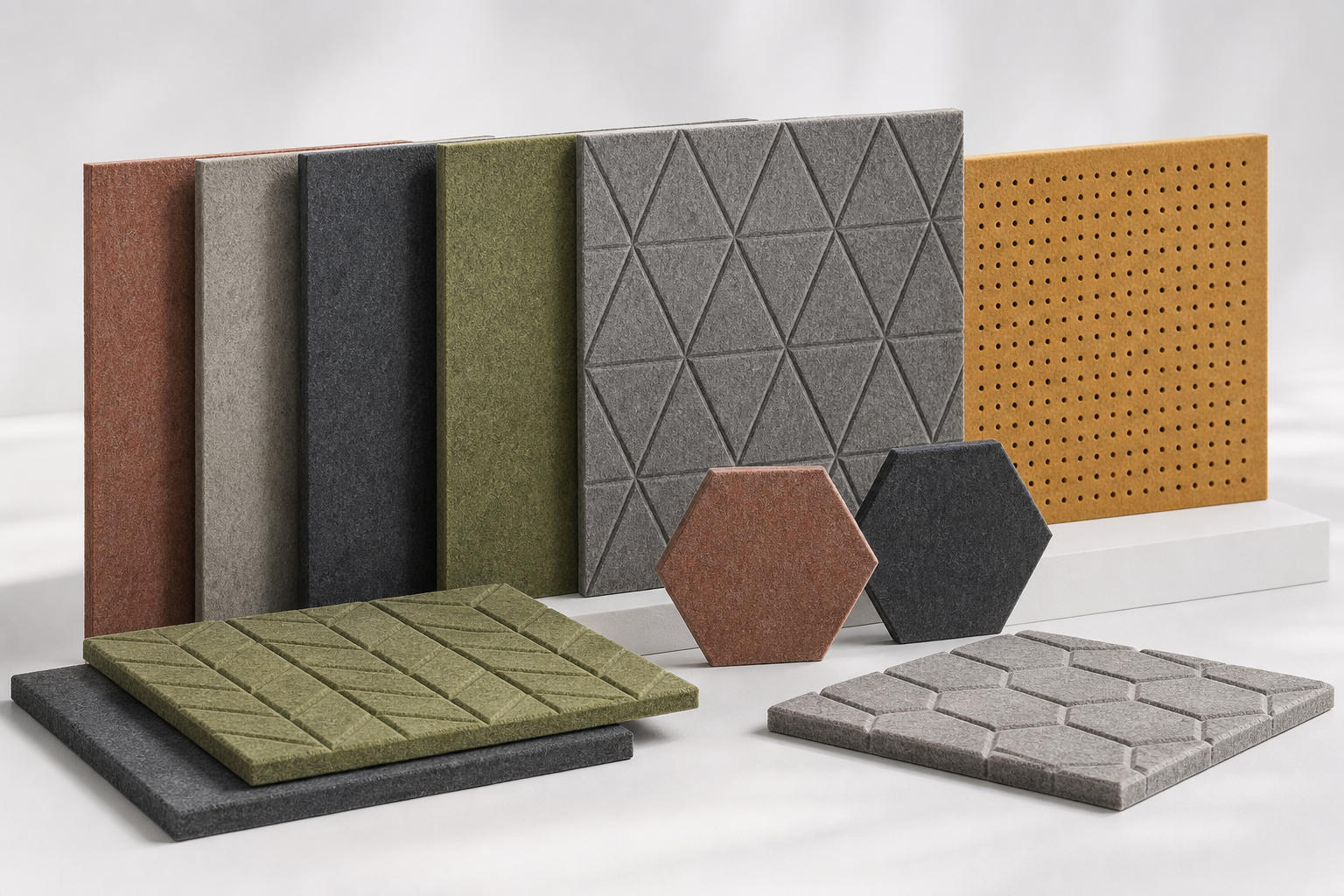 Product material study
Material character
A dense felt surface shaped for the room.
The supplied range is formed from hot-pressed polyester fibre with reported porosity above 90%. Its matte, fibrous surface can be cut, engraved or perforated for coordinated acoustic and decorative layouts.
Brochure claims for combustion and environmental performance remain evidence-gated. Confirm the selected product code and current reports before specification.
Product formats
One fibre material, four surface directions.
Choose the panel form, colour sequence and cut geometry together. Final availability, edge detail and colour match should be confirmed from physical samples.
Flat panels
Clean, cuttable sheets for broad wall and ceiling fields.
Engraved panels
Shallow geometric relief introduces shadow and directional rhythm.
Perforated panels
A regular hole field adds a finer technical surface language.
Cut shapes
Hexagons and project-cut modules support colour-led compositions.
Supplied absorption data
A complete frequency picture, not a single headline number.
The brochure records a 9 mm polyester acoustic panel tested with a 100 mm air gap and reports NRC 0.90.
These values are transcribed from supplied product literature. Verify the current laboratory report, product density and mounting condition before publication or specification.
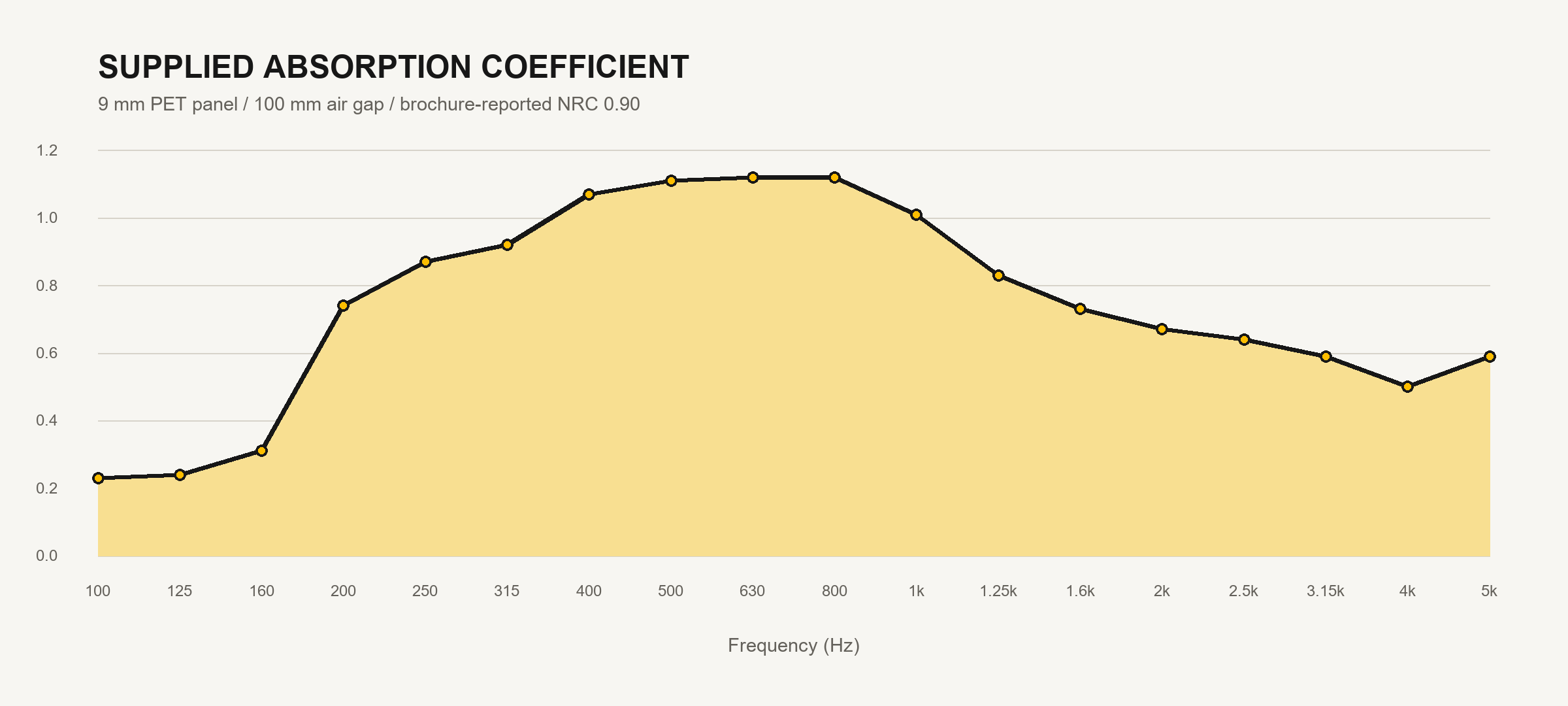
| 100 | 125 | 160 | 200 | 250 | 315 | 400 | 500 | 630 | 800 | 1k | 1.25k | 1.6k | 2k | 2.5k | 3.15k | 4k | 5k |
|---|---|---|---|---|---|---|---|---|---|---|---|---|---|---|---|---|---|
| 0.23 | 0.24 | 0.31 | 0.74 | 0.87 | 0.92 | 1.07 | 1.11 | 1.12 | 1.12 | 1.01 | 0.83 | 0.73 | 0.67 | 0.64 | 0.59 | 0.50 | 0.59 |
Installation method
Cut, align, bond and resolve the edges.
Coordinate the adhesive with the substrate and panel specification. Carry the drawing logic through cuts, colour sequence and corner conditions.
- 01
Prepare a sharp cutter, straightedge, chamfering tool, adhesive system and measuring tools.
- 02
Set out the panel sizes and colour sequence, then cut each piece to the coordinated drawing.
- 03
Apply the specified adhesive to the back and perimeter, align the panel and place it cleanly to the wall.
- 04
Press the full edge, resolve internal and external corners, and inspect every joint before completion.
Application gallery
Six spatial studies for polyester acoustic panels.
These high-resolution visual studies show intended material applications. They are design references, not completed JHS projects.
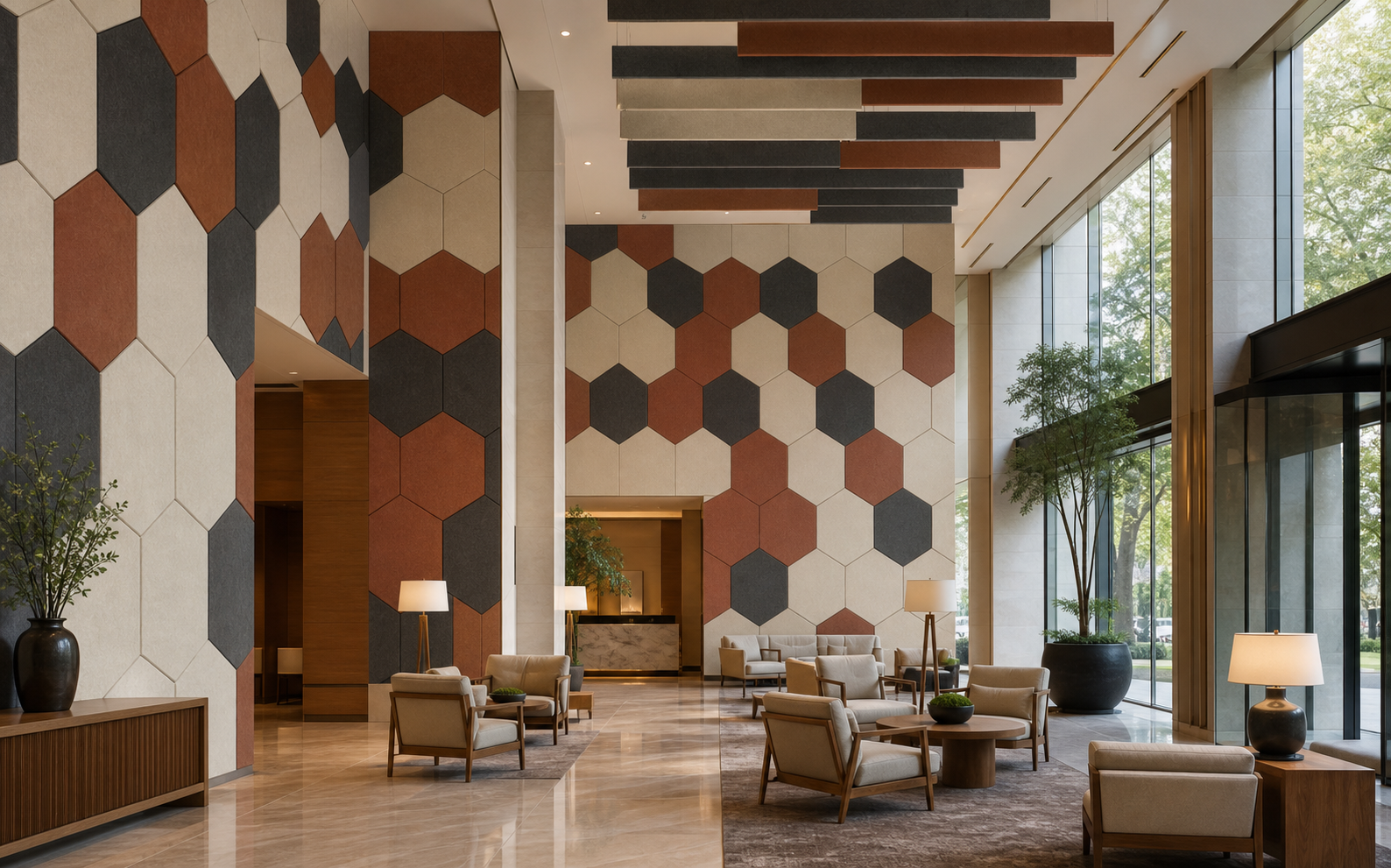
Hotel lobby
Hexagonal wall fields and suspended PET baffles bring softness to high-volume hospitality interiors.
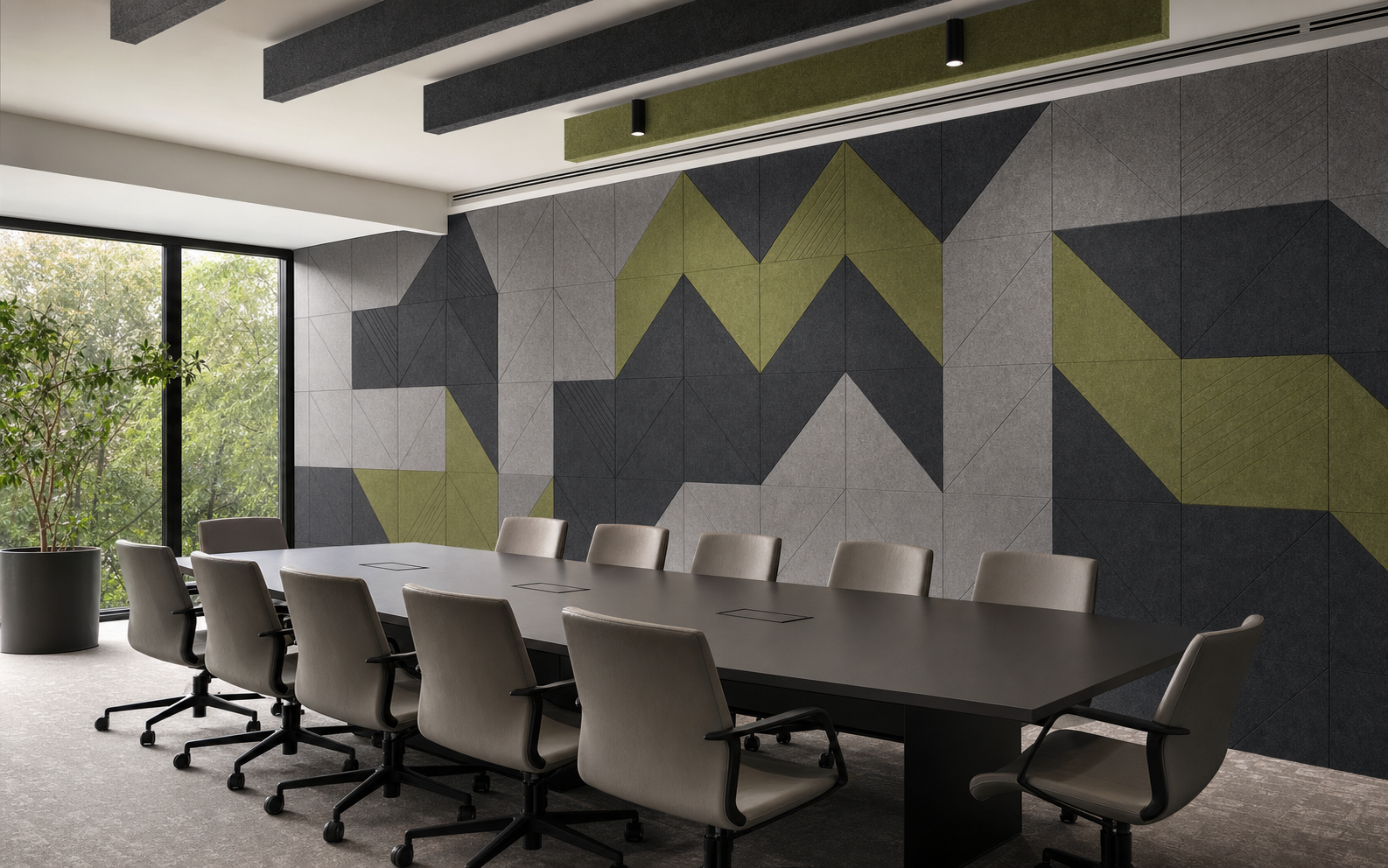
Executive boardroom
Engraved felt panels create a focused presentation wall with a restrained material palette.
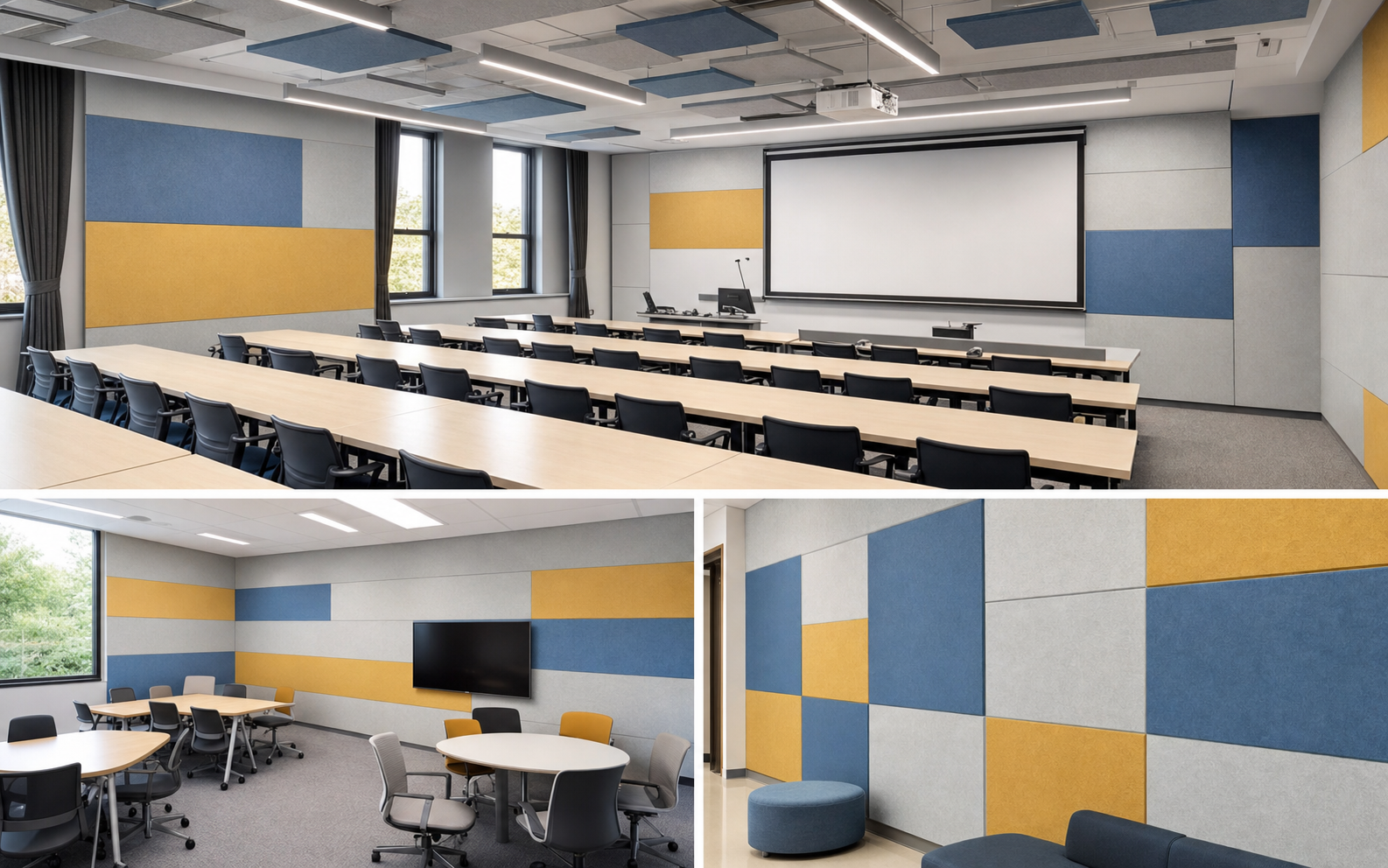
Learning space
Colour-zoned wall panels and ceiling clouds support speech-led teaching and collaboration.
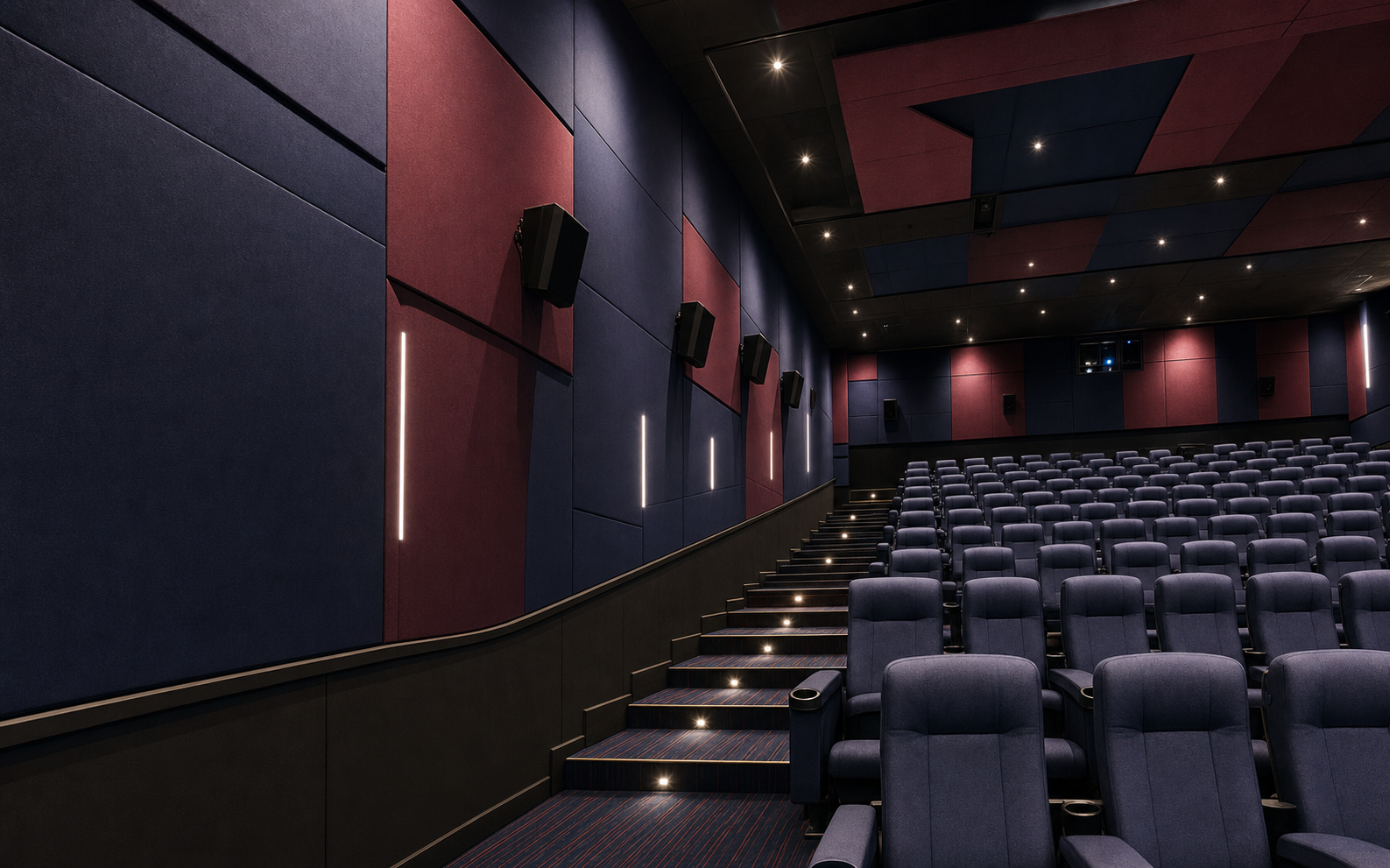
Cinema auditorium
Deep-toned wall and ceiling panels coordinate absorption with a low-light interior.
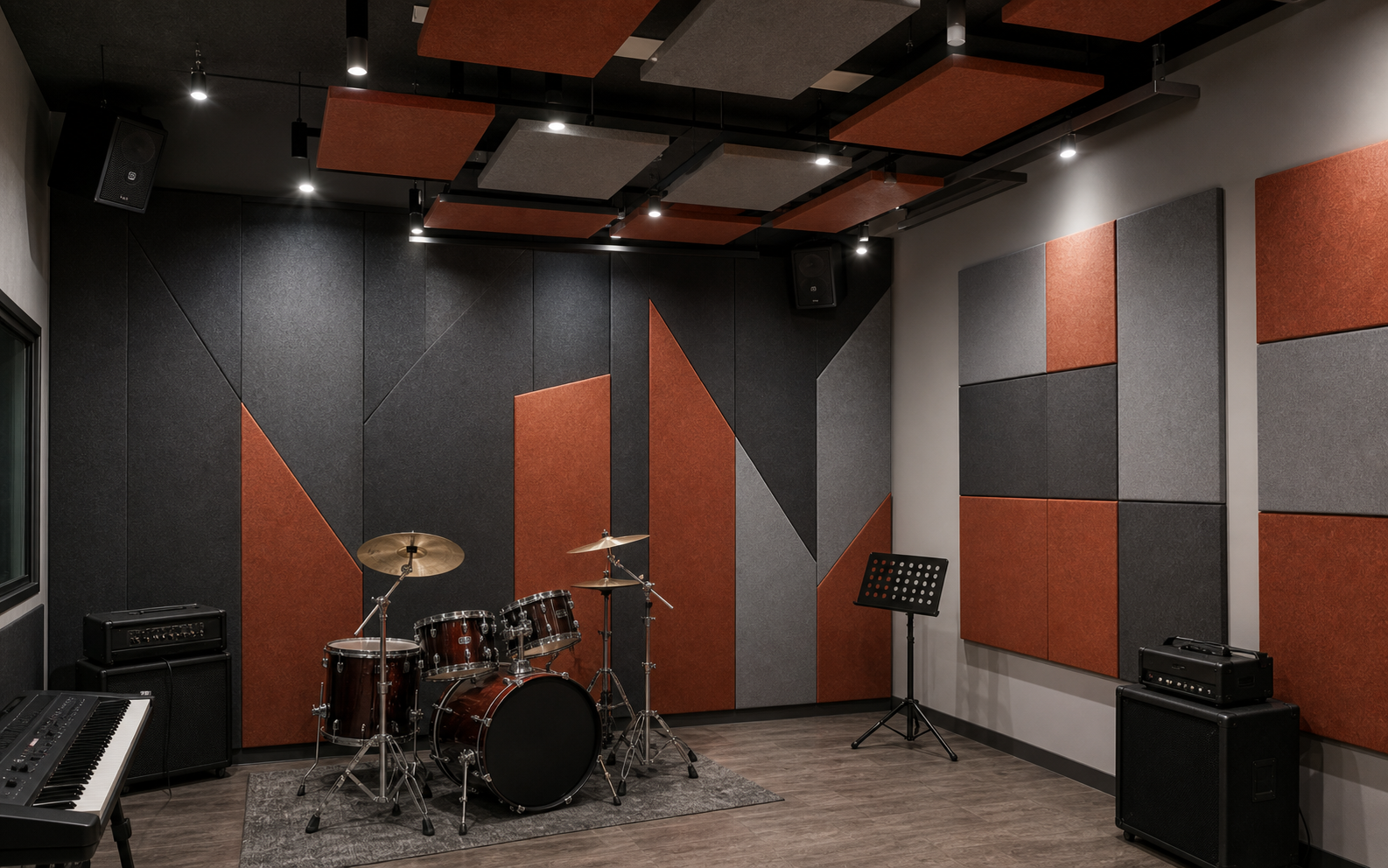
Music studio
Geometric wall treatments and ceiling clouds form a clear acoustic layer around the room.
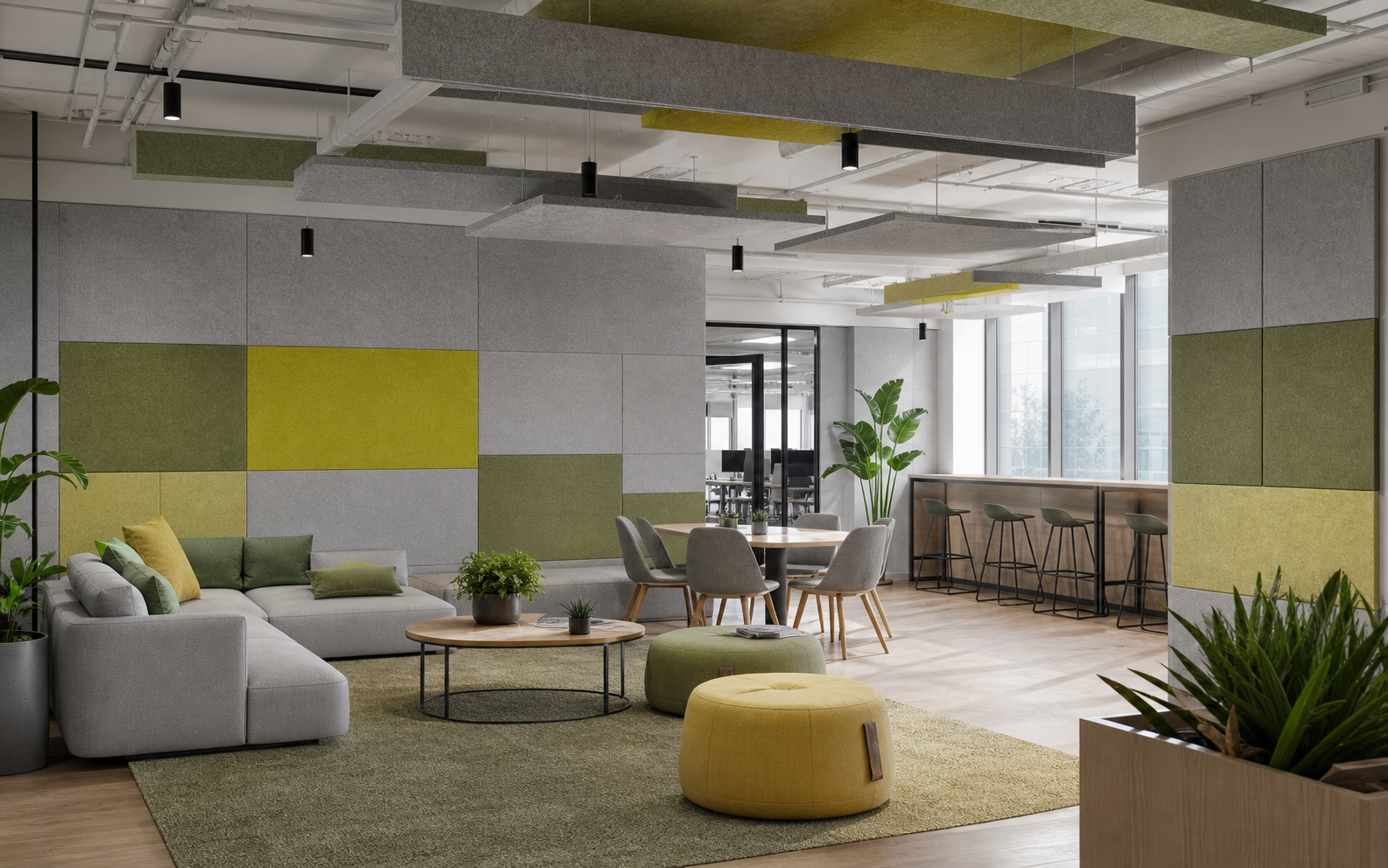
Office lounge
Muted green, yellow and grey panels soften collaborative areas without losing architectural order.
Frequently asked questions
Questions before selecting Polyester Acoustic Panels.
Clear the material, mounting and evidence questions before the product is released into a project.
01How should Polyester Acoustic Panels be selected for a project?
Choose the panel format, surface treatment, colour direction and thickness against the room use and intended visual composition.
02Which technical information should be confirmed before specification?
Confirm the current product code, dimensions, finish, mounting method, acoustic test conditions and fire evidence against the exact proposed build-up.
03Can this material be used on both walls and ceilings?
Wall, ceiling and suspended applications each require a confirmed fixing method, substrate and relevant project evidence.
04How do I begin a sample or technical enquiry?
Send the room type, drawings or elevations, substrate, target programme and any required compliance information. The project team can then identify the documents and sample route needed for review.